
It has been a very busy Spring for my wife and I. I spent modeling time in March, April and May building and finishing a large stack of rolling stock models and selling another 25 models online. I also worked on a few models for others. Modeling time was cut short due to travel, work–I got a new job–and church activities. Our kids also managed to occupy a good amount of our spare time even though they live on another continent.
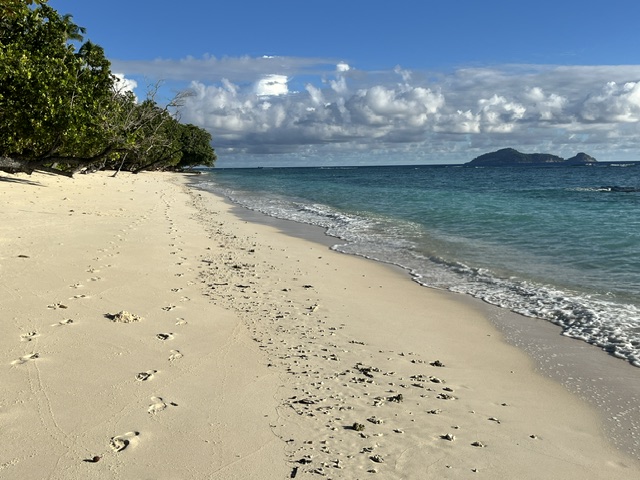
In April, Kristina and I were able to break away for a once-in-a-lifetime trip to the Seychelles. We flew from Frankfurt through Dubai, during a lull in the Iran conflict, then down to Silhouette Island for five days, then back to the main island of Mahe for a few more days. Here’s a view from Silhouette Island. It was quiet and peaceful, and very relaxing. Also very hot. Africa hot.
Also in April, my son graduated from USAF pilot school. He got his top choice of airframe out of school–the C-130J–and so we will have another airlifter in the family. Graduation and Assignment Night are big Air Force traditions and those events were very exciting for us.
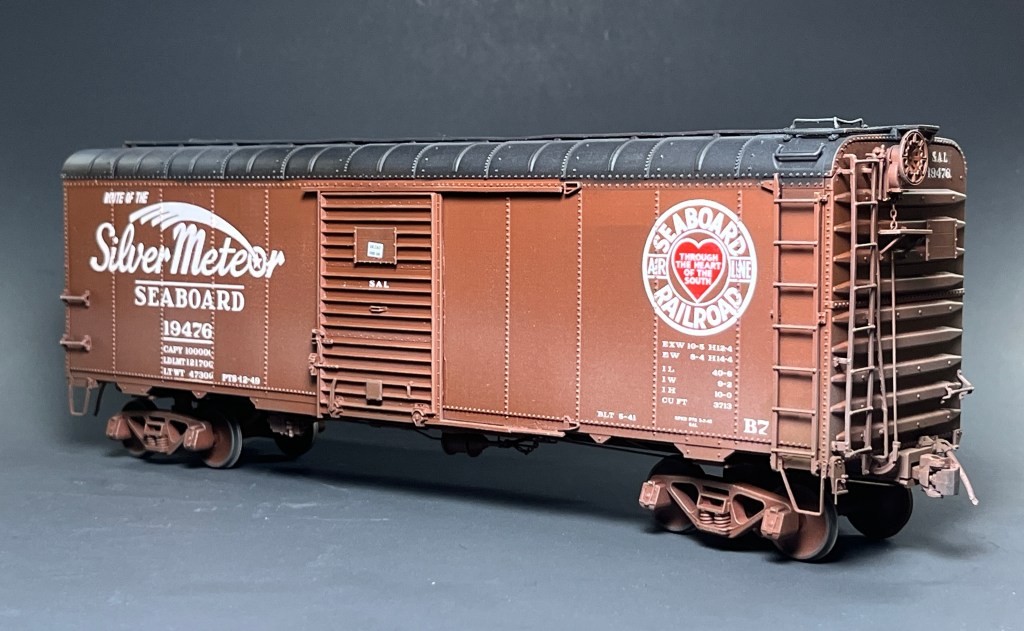
Part of the delay with publishing new posts is that most of my new work was in the process of finishing until now. I have layout modules, depots and all kinds of things under construction for the new layout, and models of all kinds in HO and O scales in the works. This long-overdue post covers one of the models I finally finished this month, the new, beautiful, Smoky Mountain Model Works Seaboard Air Line B-7 box car.
The SMMW B-7
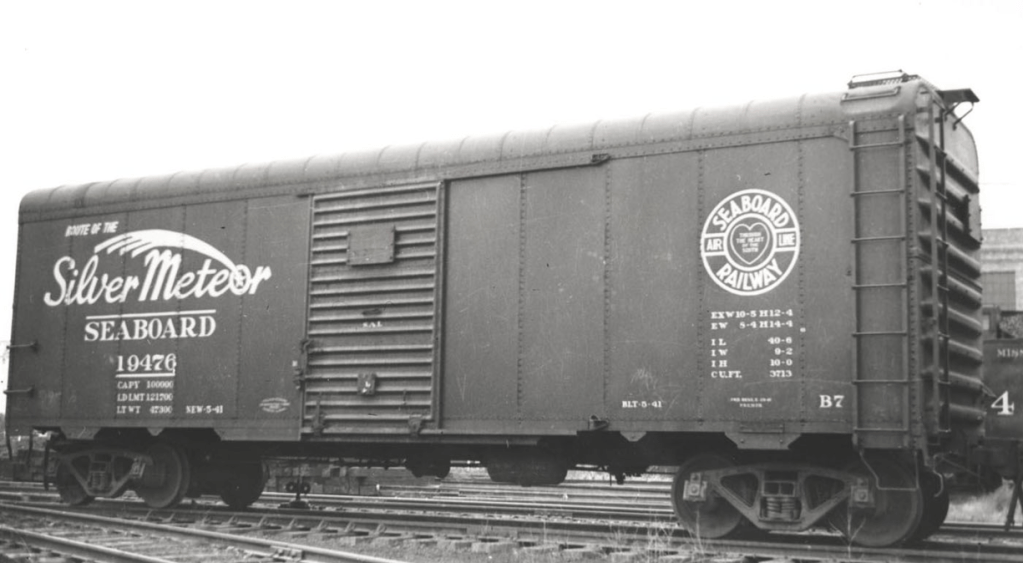
Pullman Car Works in Bessemer, Alabama delivered 500 single door box cars to Seaboard Rwy Co. in May 1941. They were 40-foot all-steel “Turtleback” (round-roof) box cars with a 10-foot interior height, and were the single-door variation of Seaboard’s earlier AF-1 and AF-2 Auto cars of the same type. Seaboard classed them as B-7. The first 300 cars were delivered with Apex running boards and brake steps, and the remaining 200 cars were delivered with Blaw-Knox running boards and brake steps. All the cars were built with ARA trucks, AB brakes, Youngstown doors and corrugated Pullman proprietary ends. Original paint was white on DuPont Tufcoat Brown, with the Route of the Silver Meteor slogan and a small, 40-inch monogram with Railway (not Railroad) lettering with no red in the heart.
Below. The prototype SAL B-7 in original paint. George Sisk photo, C. Winters collection, location unknown, 1941.
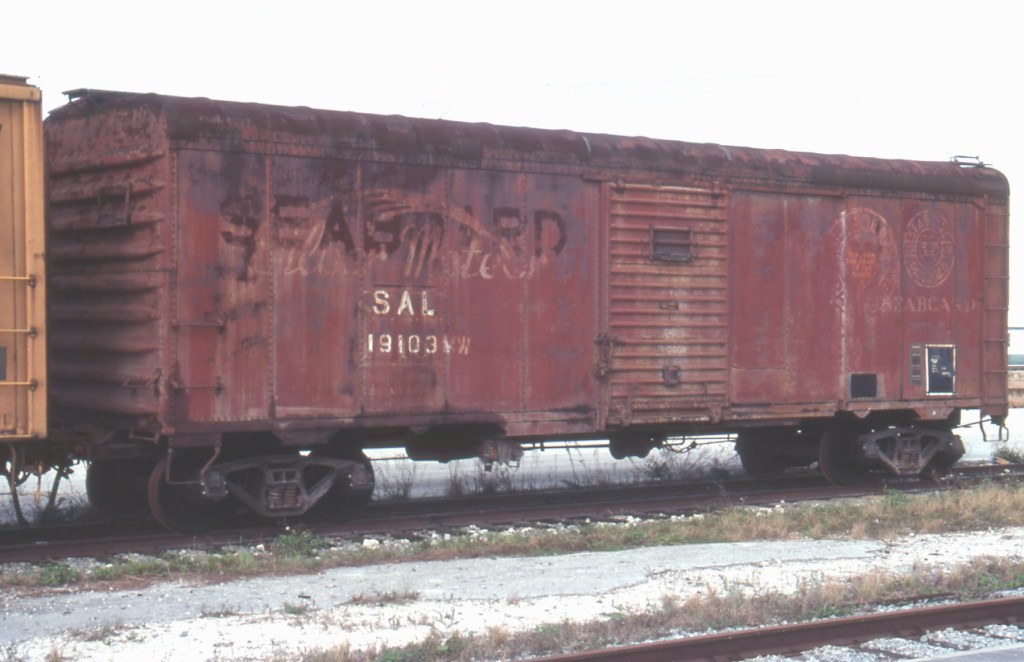
Some of the cars survived well into the early 1990s in Roadway Maintenance Service on CSX. Here’s a photo of one I found at Hialeah Yard in Miami in 1990. I was down at Homestead AFB on a short TDY and broke away for an afternoon to hit the beach and chase trains. The original lettering is still able to be seen.
Jim King of Smoky Mountain Model Works and I are longtime friends, having met at Savannah RPM in 2003. Jim announced the B-7 in 2022 and I paid for mine in 2023. I received my model two years later in December 2025. Why the long delay? Jim originally planned to 3-D print masters for the model and then cast all the parts in resin, but in the intervening years Jim upgraded his equipment and was able to 3-D print the entire model. It took Jim over a year to install and test the new equipment. In an e-mail Jim called the delays “changes in mid-stream due to technology upgrades”.
Jim also encountered CAD issues. He originally planned to upscale his HO and S scale versions of a similar model he produced in both HO and S, but the results weren’t satisfactory. He ended up redesigning most of the model, and asked Sarah Griessenbach from Train Kitchen to create all new Youngstown door, tracks, and hardware for the project. Jim completely redesigned the underframe and the running board halfway through the project following receipt of original prototype drawings.
I waited a long time for my model and then had to wait even longer to get it. Jim sent my model via UPS, which can’t deliver to my post office box here in Germany. My model got locked up at UPS in Cologne and it was another 45 days before they figured out how to get it to me, and along the way they were kind enough to break it open and inspect it. On top of all that they charged me another 20 Euro tariff.
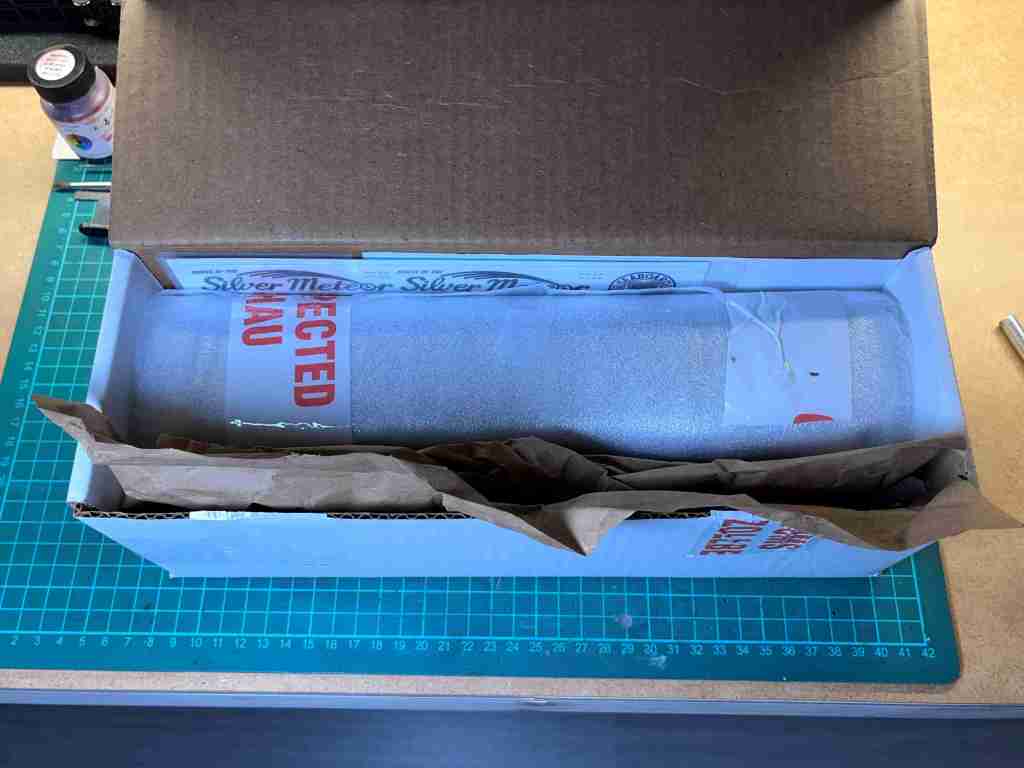
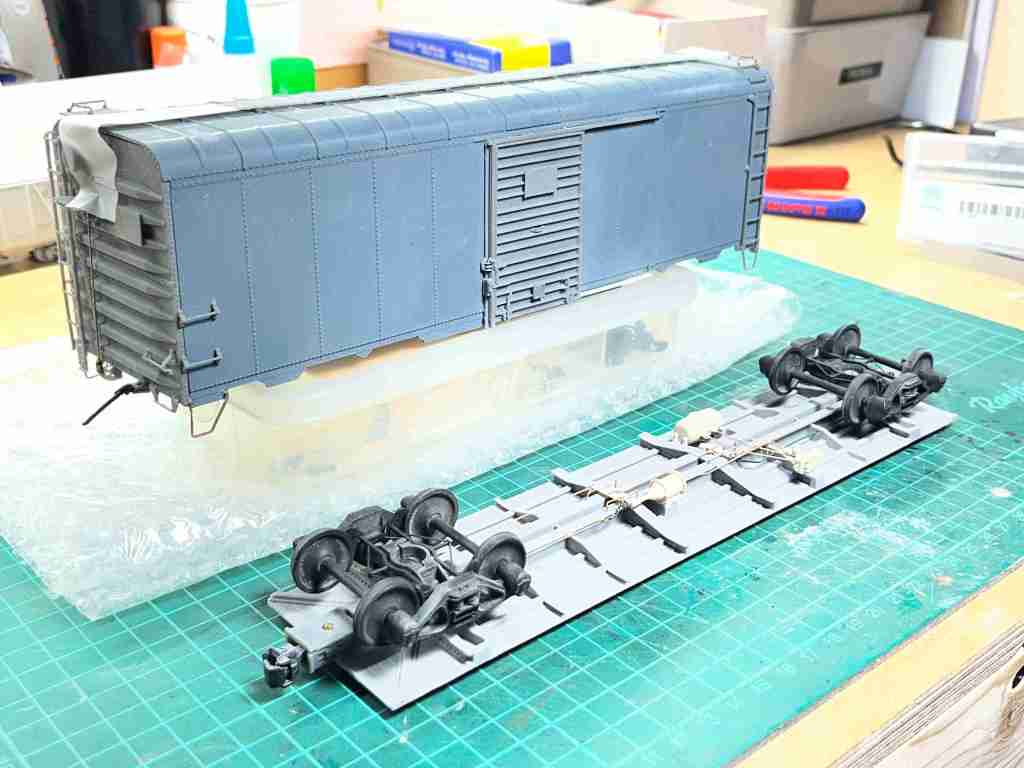
In January I brought the model on a work trip and was able to get it mostly built in just three evenings, working about 90 minutes a night. Jim put a lot of thought in the design and all the parts fit perfectly. The model practically fell together. As seen below, Jim carefully packaged the model in component bundles which made construction even easier.
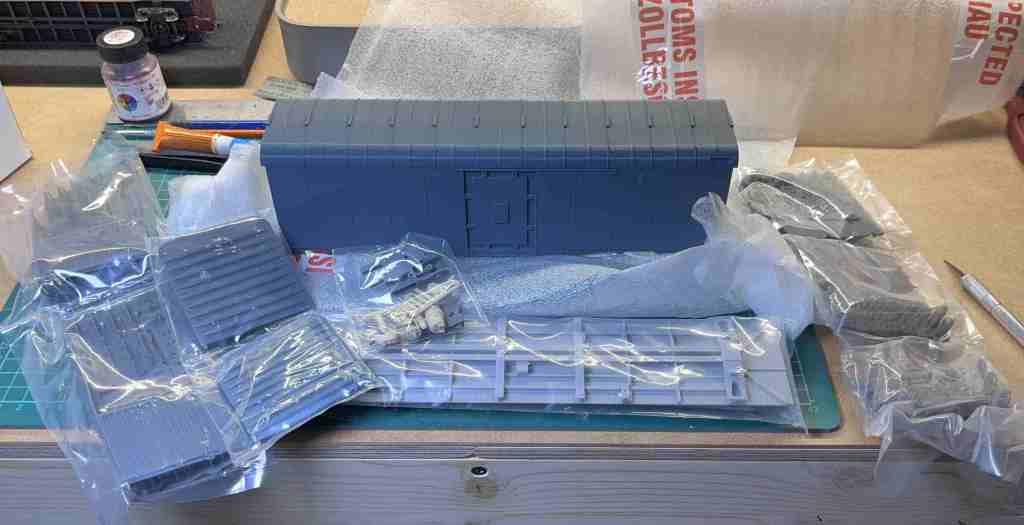
Below. Here is the result of three short evenings of progress. I was able to install all the brake gear in just a single 90-minute work session. The kit also includes all the right wire and screws, and draft gear, and everything needed to finish the model.
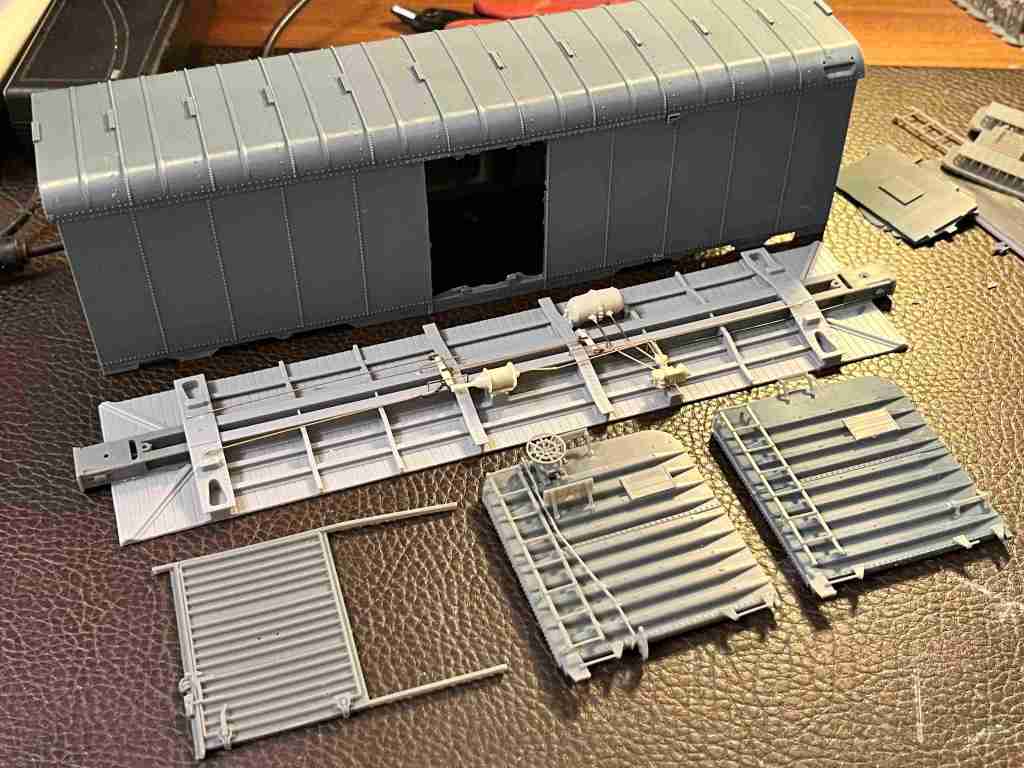
Speaking of draft gear, Jim included a new Kadee-compatible design that’s got to be the best available on the O scale market.
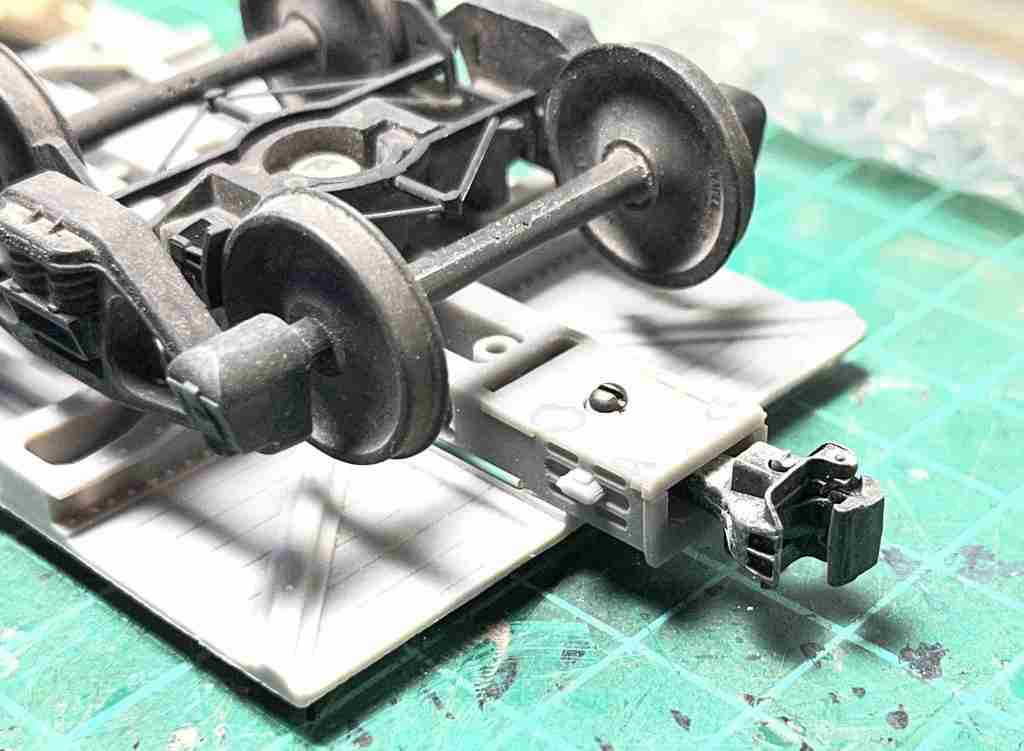
The new draft gear is separately available, and I bought more copies to install on other cars. Here is the new draft gear on an old Precision Scale PRR hopper, below. It fits great, looks great and works great.
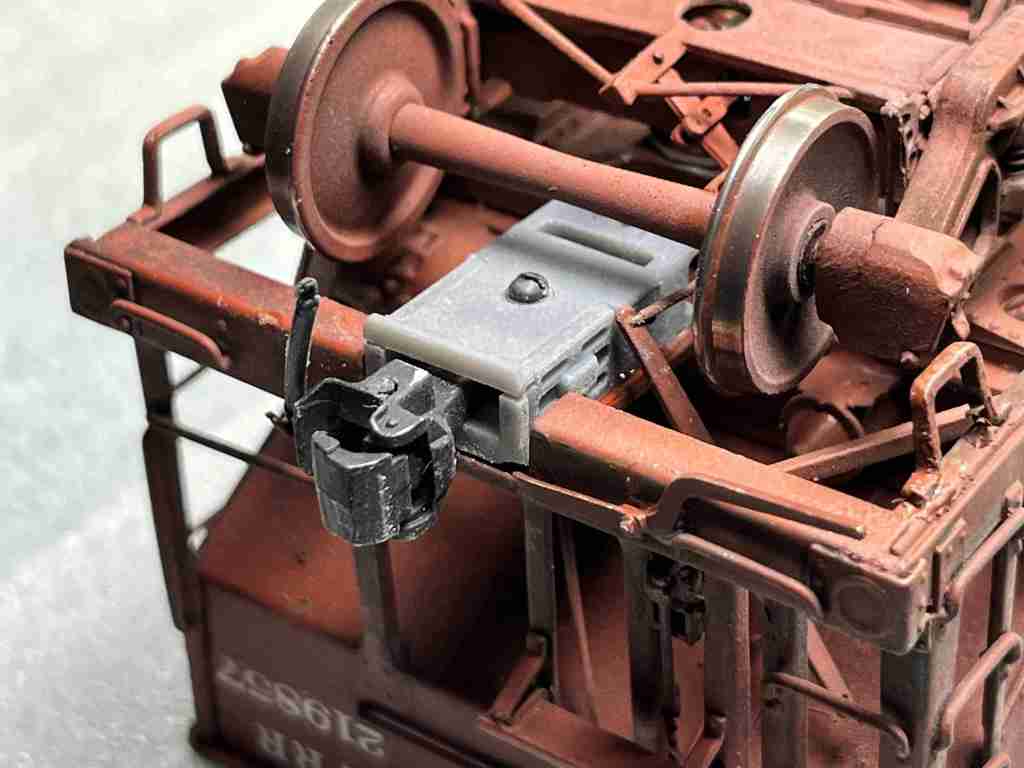
A few of the fine detail parts turned out to be quite brittle. I snapped off a few parts and Jim sent replacements, and we also talked about potential solutions. Eventually Jim tried a new, flexible resin in his 3-D printer and sent me a few parts to test. The new material is tremendous. I bought a bunch of new parts and re-fitted my car and is much more durable now.
Below. Here’s an example of the ladders printed with the new resin. It is somewhat like Delrin, but holds detail, and stays put using ACC. It can also be painted.
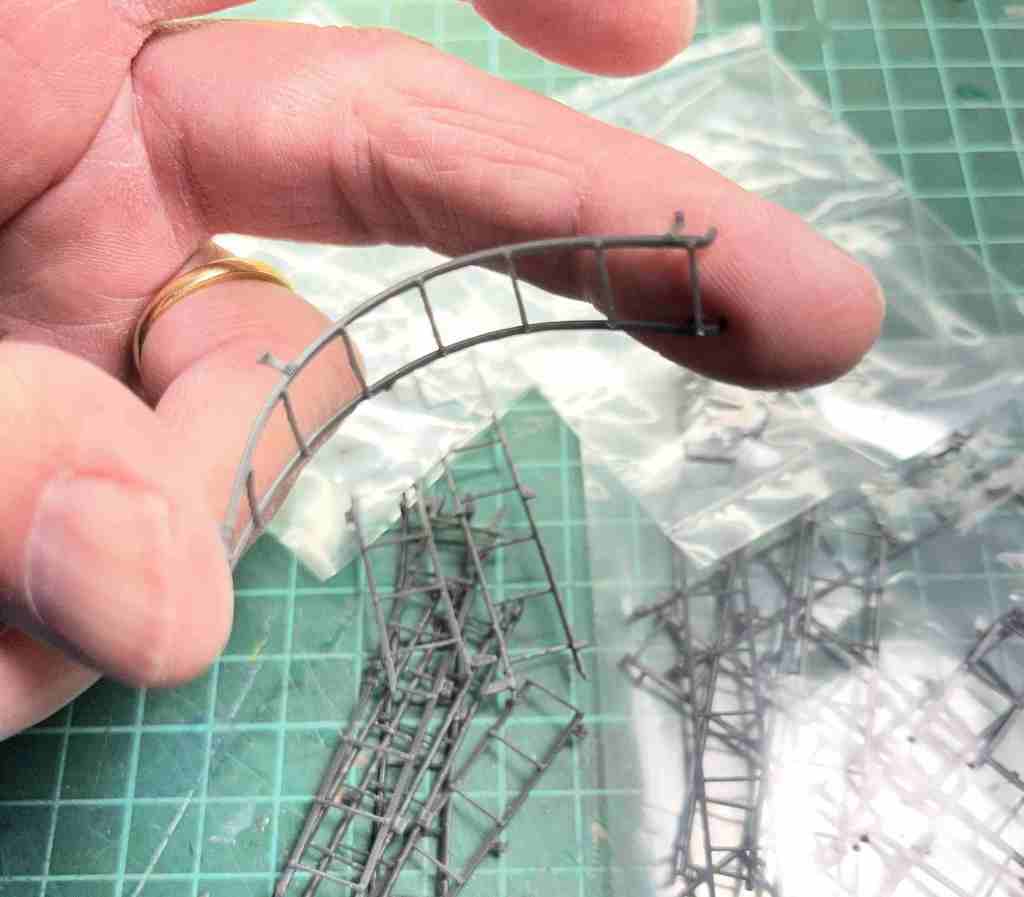
Jim is upgrading this kit and future O scale kits with the “flex resin” as he calls it. Fragile parts like ladders, grabs, steps, running board grabs, brake wheels and housings, and so on are bring printed with the new stuff. Jim says the end result is a new series of durable, finely detailed parts.
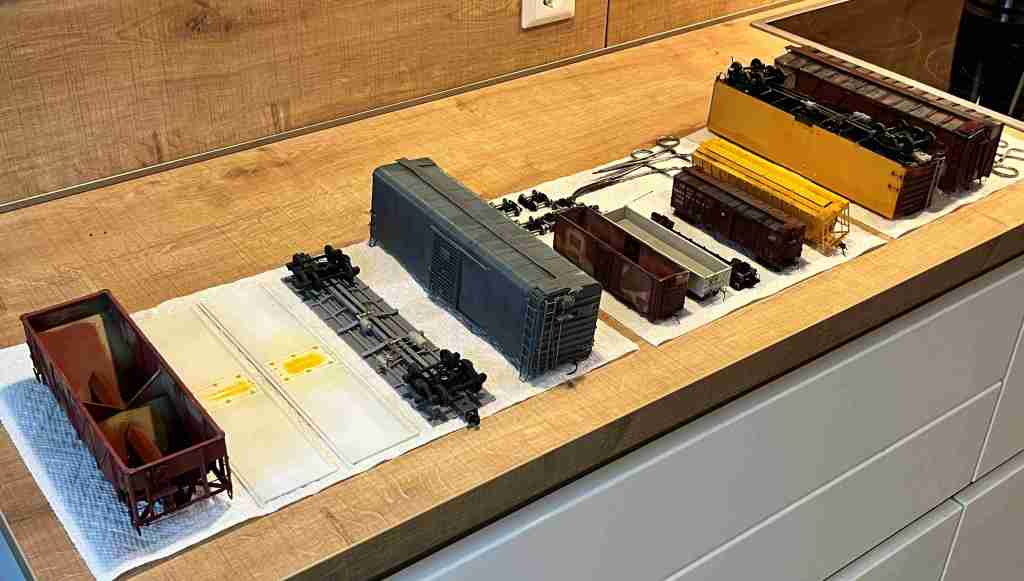
I sandblasted the completed model–with a lot of others–in my North Coast sandblast booth to get them everything ready for paint. The B-7 is front and center. Sandblasting didn’t affect the carbody resin, or the new flex resin, in any adverse way. Here’s the whole lineup after a Saturday morning sandblasting session, drying after a warm-water wash.
After the model dried it was time for paint. This was in April.
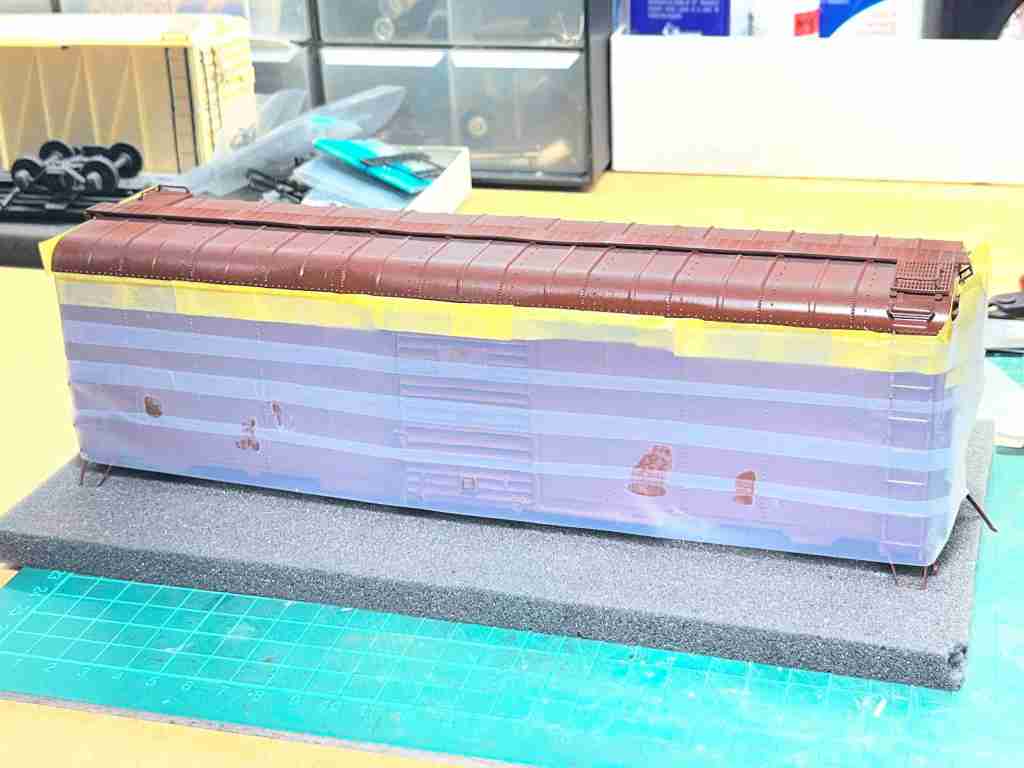
I painted the carbody, underframe and trucks with Testors Brown–you know, the old Model Masters stuff. I prefer to use ScaleCoat 2 Box Car Red #1 for SAL cars in the immediate post-war era, but getting ScaleCoat here is not possible. The Testors color is quite close and available at my local German train store. It went on well although I had to use almost two entire jars to get complete coverage. Then I masked and painted the roof black, as seen below, to represent car cement.
Here’s the carbody after removing the masking, and all ready for decals. The paint looks good!
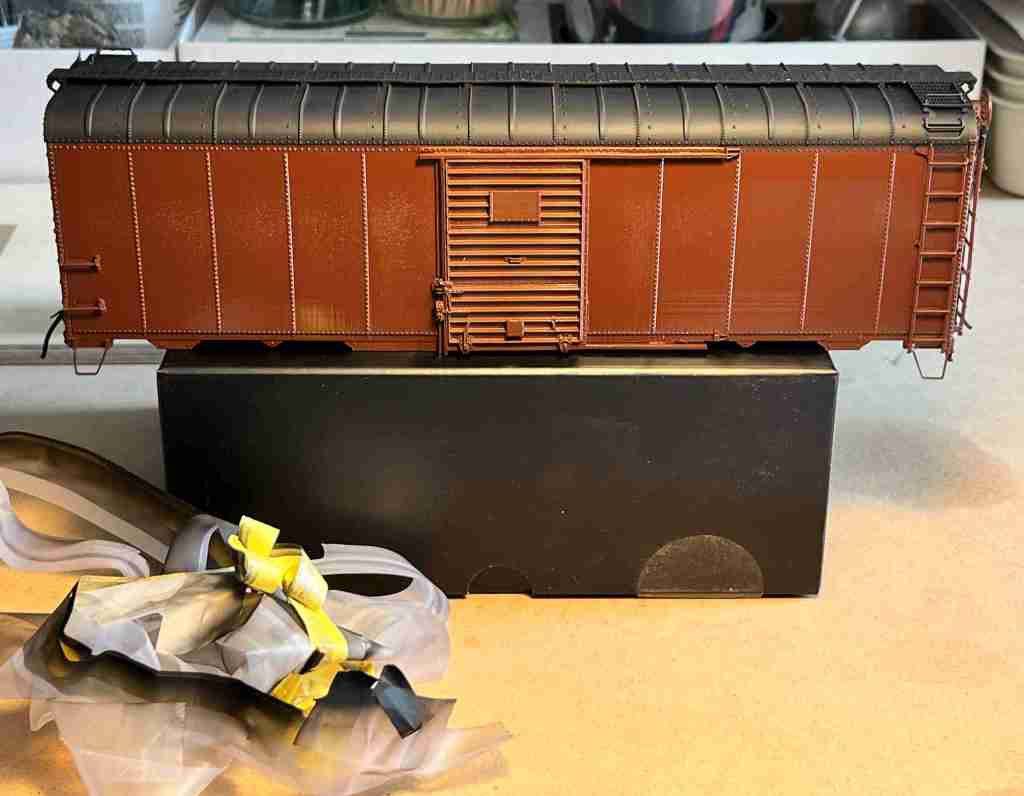
The kit includes decals for most pre-1960 SAL paint variations. I didn’t take any pictures during decaling, but applying the decals wasn’t any different from any other O scale model. I applied the decals on the car and positioned them using water only. Later I used Microscale setting solution to settle the decals over the rivet belts.
In addition to paint, another thing I can’t get here is Testors Dullcote. I’ve used a lot of other brands in the 8-9 years I’ve lived here and haven’t found anything as good. This time I tried Pactra Siedenmatt (semi-gloss). Remember Pactra? I used to use Pactra paint when I was a boy building model airplanes. Pactra is still around and provide about the only lacquer model paint available in Europe. I used this little thing on the right…
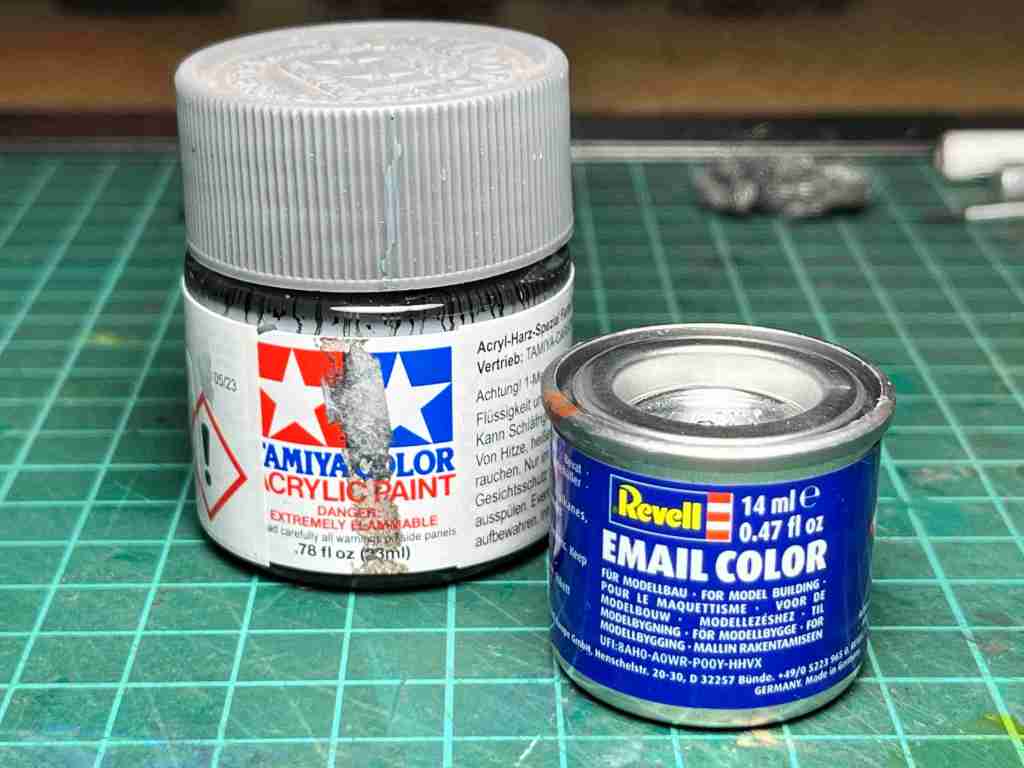
…and after quite a bit of thinning it worked great. It took a lot longer to dry than Dullcote but honestly I like the result better. Here’s the completed model the dullcoat and some light weathering.
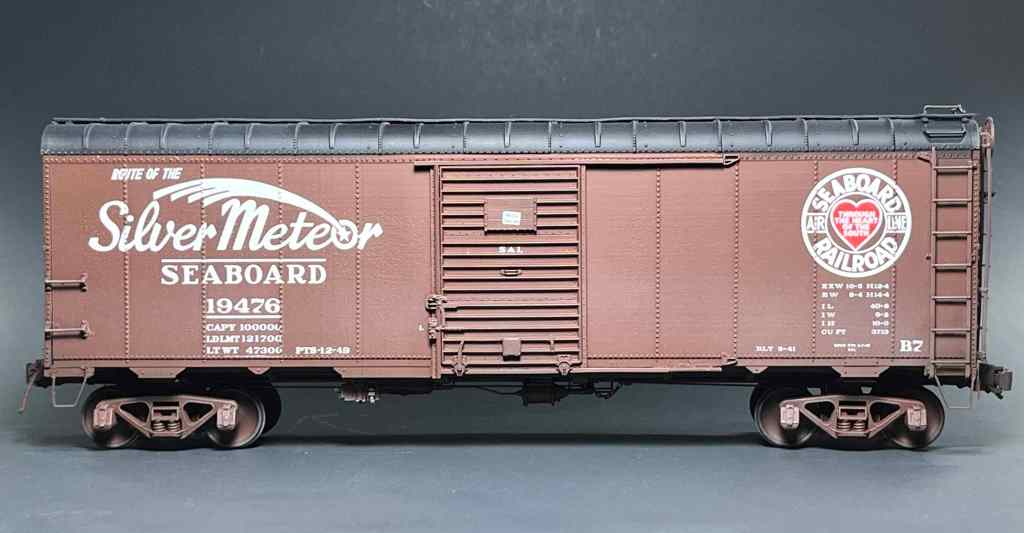
I weathered the model with a very light dusting of Model Masters Light Tan and AIM Delta Dirt weathering power. I made sure I didn’t over-do the weathering. I also polished the wheel treads using a miniature wire brush in my Dremel motor tool. The wheel treads on the Kadee trucks polished up quickly to a nice, prototypical silver color.
If you haven’t worked with O scale, these are big models. For size comparison, here’s the just-about-finished B-7 next to an HO brass caboose I also finished in May.
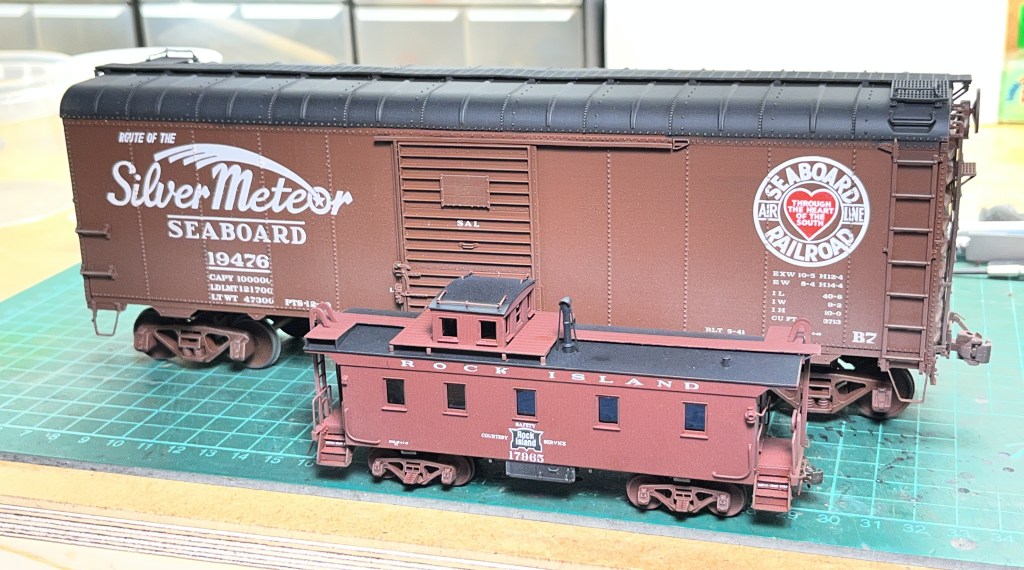
And that’s it. Patience yields an enjoyable building experience and a terrific model. Try one of Jim’s new models–you’ll like it!
More posts are coming soon as I am wrapping the finish of over 20 new models, and the new layout is now underway too. I have a lot to share with you. Sadly I had to cancel my trip to St Louis RPM this year, but I hope to get back to the US soon to see you. Blessings to you and your families! – John


John
remarkable work. I am amazed at your dedication to working on models during your business trips.
Gene Deimling
LikeLike