
A week before Christmas 2024 I dragged my buddy Lonnie Bathurst out to Swanea, Illinois to visit a fellow prototype modeler, Steve Goaring. Steve is a lifetime model railroader and models the Illinois Terminal System (ITS) O’Fallon District in HO scale in his basement.
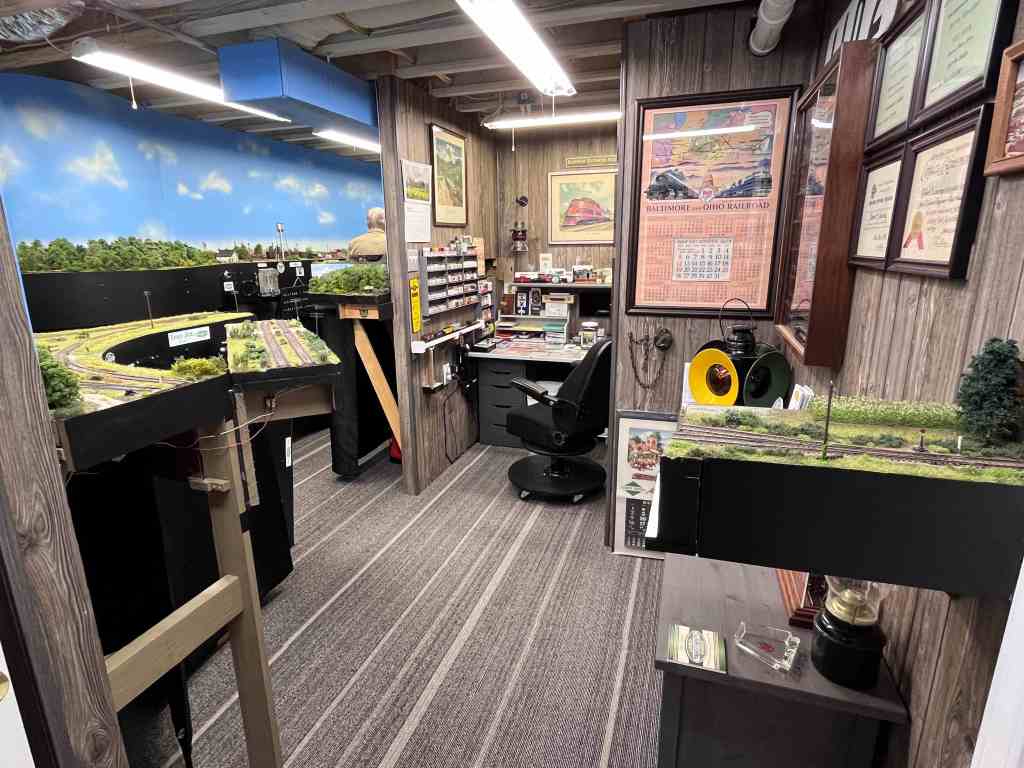
Steve graciously invited us into his home, introduced us to his family, and then took us to the basement to see “The Museum” as he called it. Below, here’s the view of Steve’s layout and workbench as you enter the layout room. The small swinging portion of the layout at the left allows unobstructed access to the layout room. Everything is clean and thoughtfully put together. Railroadiana is sprinkled around the room to create atmosphere.
Steve’s layout was featured in the July 2022 Railroad Model Craftsman.
Most exciting for me is that Steve models an Illinois Terminal non-electrified branchline that once ran right though O’Fallon, Illinois. I have lived in O’Fallon three times and once owned a house on Elisabeth Drive that was built adjacent to the line. The line was long-abandoned by the time I first lived in O’Fallon in 2003, but back then signs of the old railroad were everywhere.
Steve models 1961, just a few years before the line lost most of its traffic and began its eventual decline and abandonment.
Below. This wye is essentially where the layout starts. To the left is staging, representing Troy and Edwardsville, Illinois. The track coming to the viewer is staging to East St. Louis. The track going to the right continues around the room, around a long peninsula, to O’Fallon and the St. Ellen Mine in Fairview Heights.
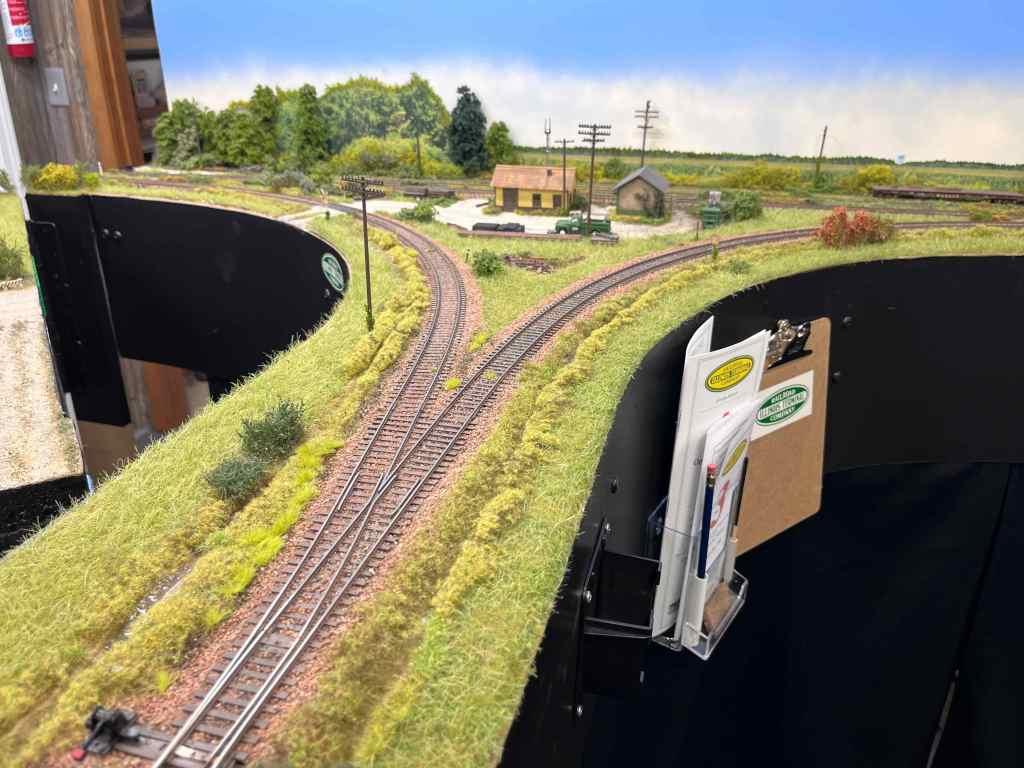
Below is a view of Troy Junction which is immediately to the right of the wye seen above, and on the main track to O’Fallon. The entire layout is completely finished and detailed to this fine level.

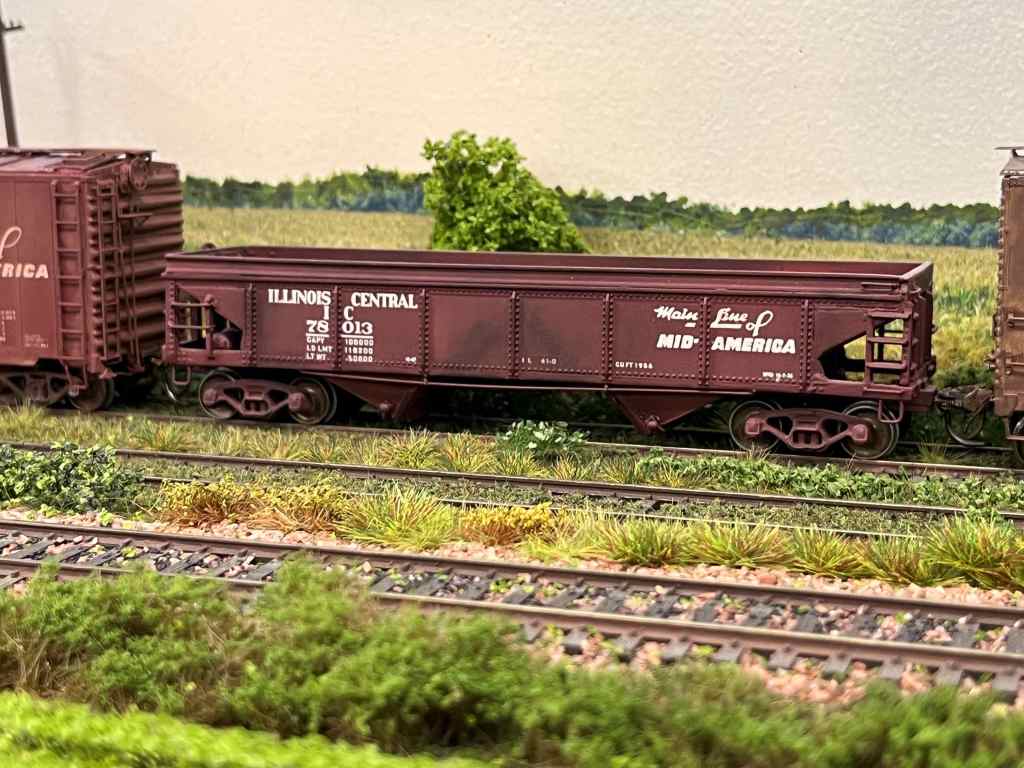
Above. Here’s another view of the cars at Troy Junction. Steve had a few notable kitbashed models on display on the junction tracks, including a kitbashed MoPac lime hopper and an IC low-side coal hopper as seen below. Steve bought the hopper at a swap meet; it looks like it was cut down from an old Bachmann low-side gondola.
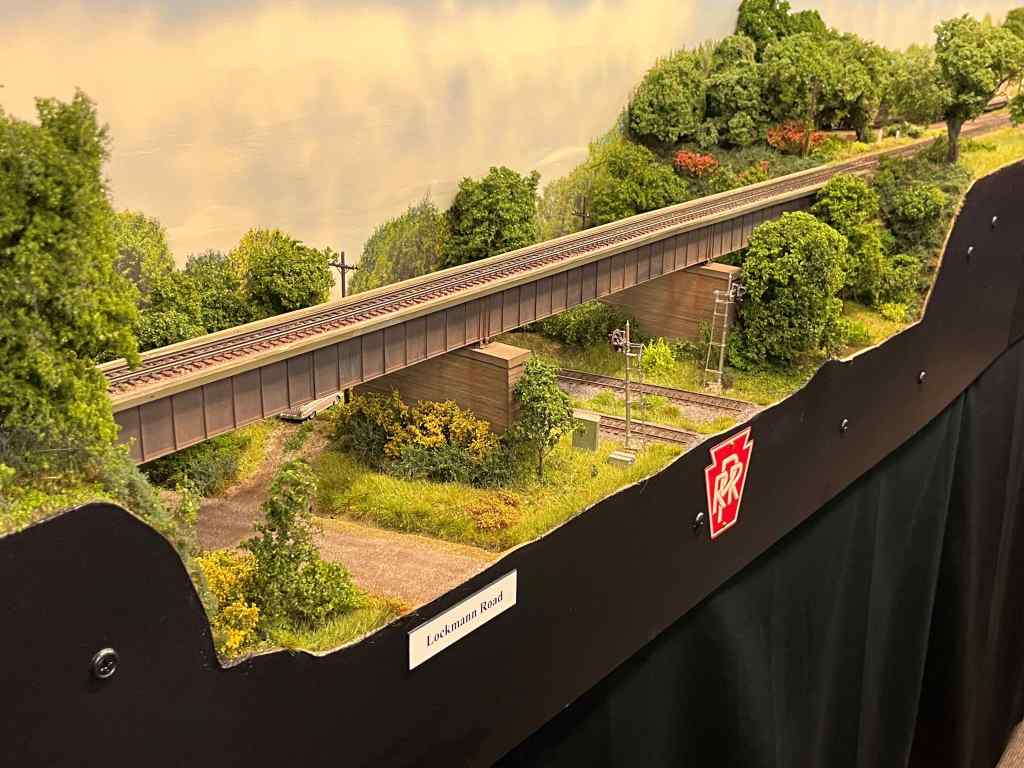
Below. The first feature reached after Troy Junction is the bridge over the PRR near Lumaghi Heights.
In the mid-1920s, the Illinois Traction System won a long court battle to build a connection from Troy Junction, over the Pennsylvania Railroad mainline and the Baltimore & Ohio main line, to reach the large St. Ellen coal mine–and a connection with the L&N–in O’Fallon. Don’t quote me but I think the connection was about ten miles long. Here is Steve’s rendition of the ITS crossing over the PRR. The great PRR fleet of T-1s, Q-2s and J-1s all charged through here back in the heyday.
Here’s what the same area looked like around 2012. We’re looking east on the old PRR St. Louis line. Since then a bicycle bridge has been built along the ITS line so one can cross overhead the PRR just like the ITS trains once did.
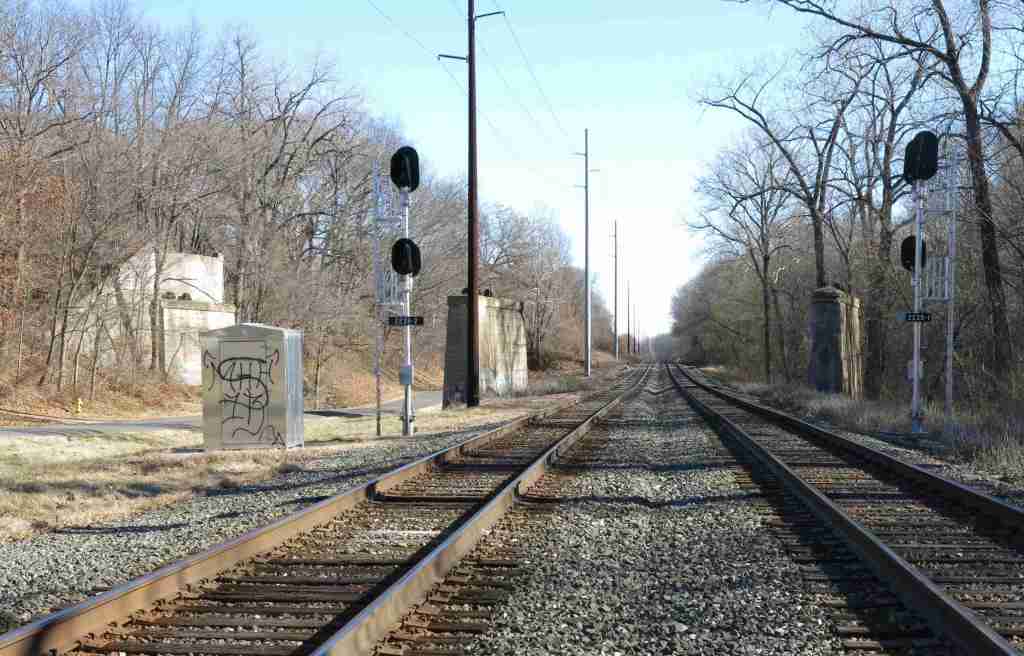
Below. The crossing over the PRR included a two-track interchange that allowed the ITS to expedite freight to and from the mighty PRR outside of the city. A large volume of coal and chemicals interchanged between the PRR and ITS paid for the line.

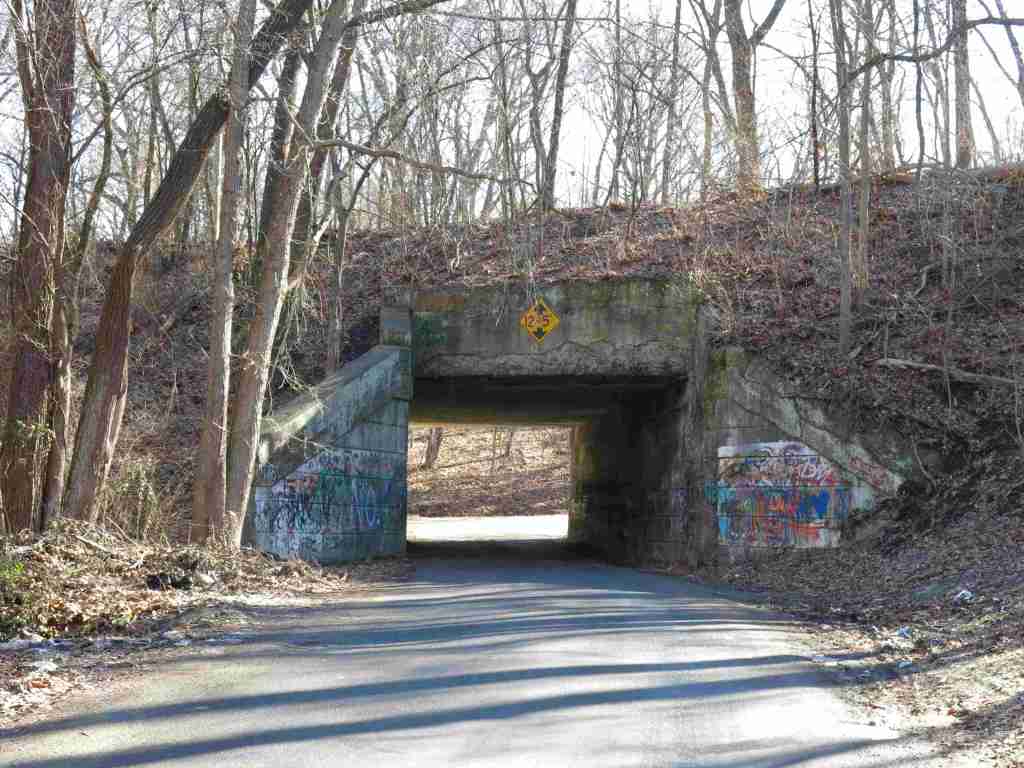
The connection between the PRR and ITS included several concrete overpasses. They still exist although the tracks are long gone.
Below. Here is a broader view of the layout. The PRR overpass and connection are at left. On the right is the main track to O’Fallon. Interestingly, Steve has obscured much of the line with trees in front of the viewer. Steve also has built-in a slight upgrade on each of the curves so the rail height increases by about six inches at the end of the line.

Below. Here’s the Bethel Road crossing. There used to be a coal mine here in the 1920s.

Below. The Ogle Creek crossing is a big feature on the rail-trail that’s been built over the old line. Here’s how Steve modeled it when it was still in service with the ITS. It is very convincing. I’ve crossed this creek a few hundred times walking or running on the trail.

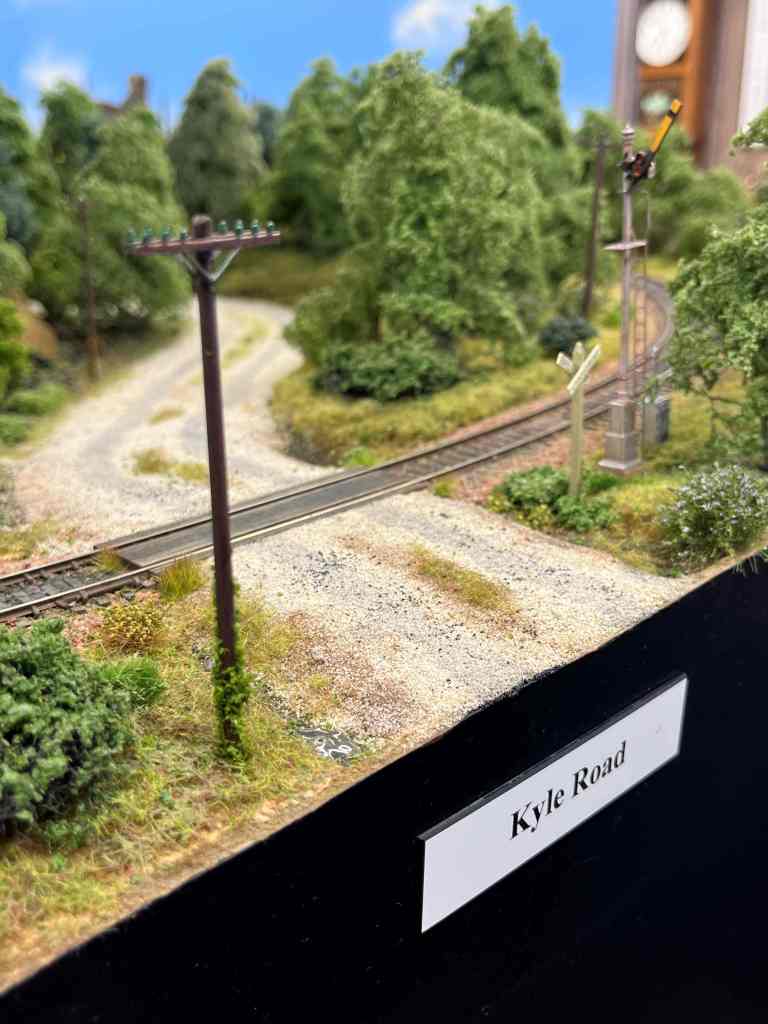
Below. The home signal across Kyle Road, looking west. Today the Kyle Road crossing has been completely gentrified and is surrounded by new houses and schools.
Finally, below, we arrive in O’Fallon. Several railroads met here–an L&N branch, the Baltimore & Ohio St. Louis mainline (seen in the foreground–which included CB&Q freight and passenger trains on trackage rights), the St. Louis & O’Fallon RR, the St. Louis & Suburban, and the ITS of course. The L&N terminated at their won depot behind the white house at left.
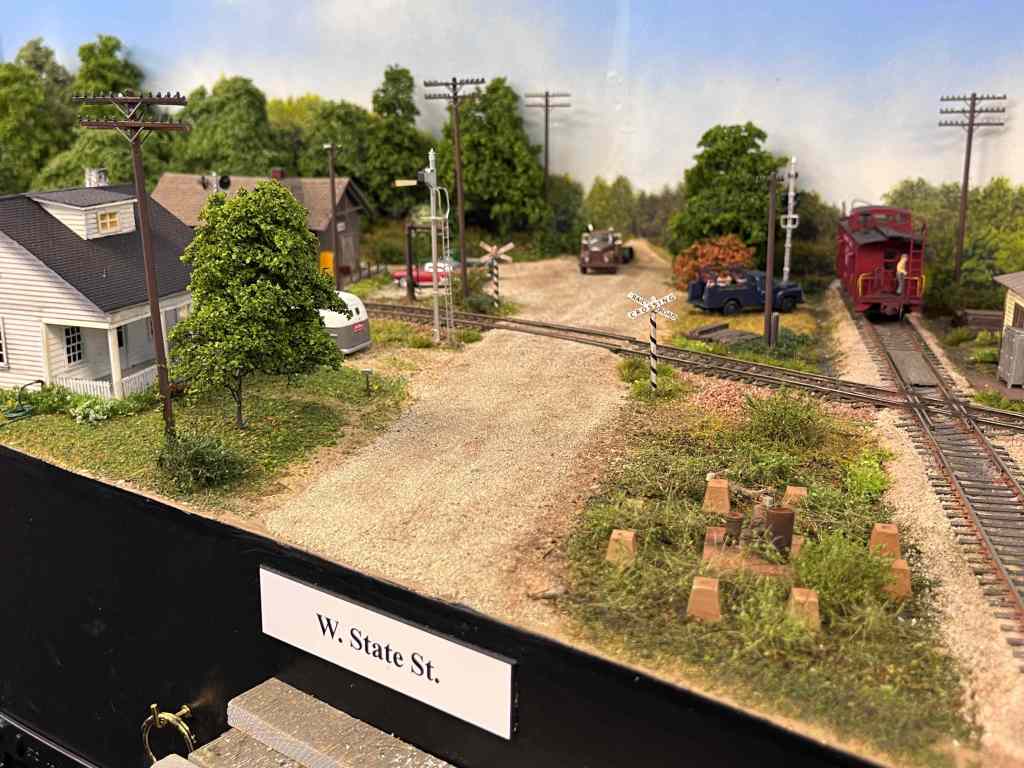
Below. Here’s an aerial photo from the mid-1950s which shows the junction. The ITS enters the photo at the top right and proceeds diagonally to the bottom left, and terminates at the large St. Ellen mine out of view on the left. The L&N depot cannot be seen–it has already been dismantled and the line abandoned, but Steve still models it.

Below. Steve has done a great job modeling the long-forgotten L&N depot.
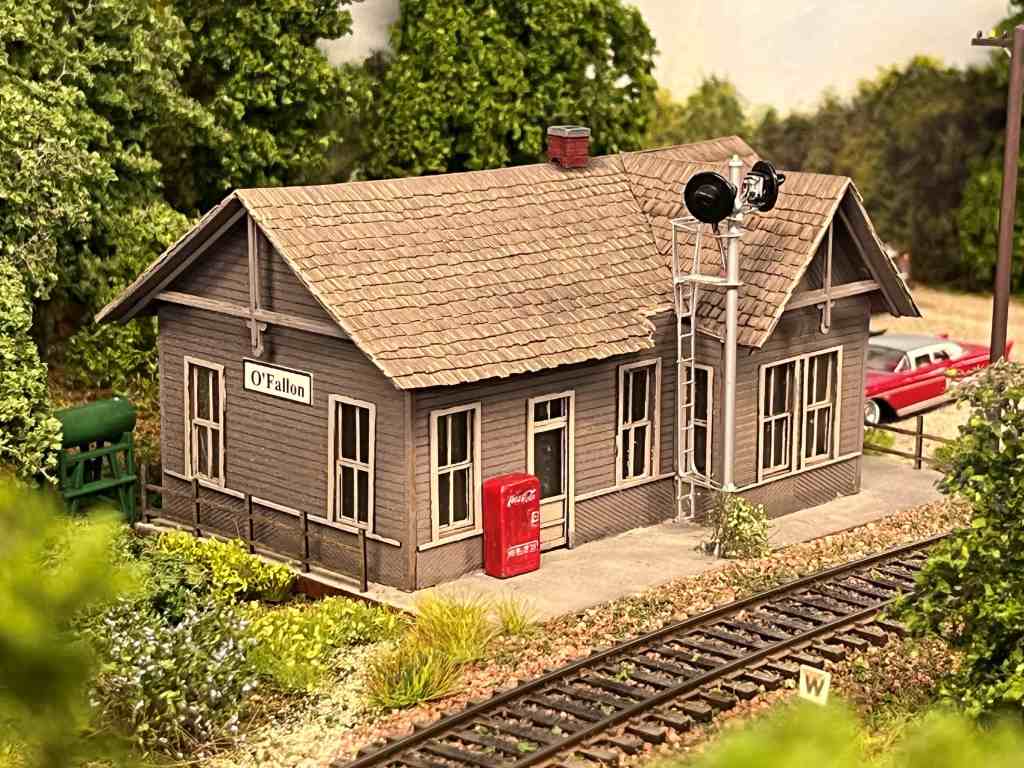
To cross the B&O, ITS operators are required to open the relay box, seen below, and operate a timer to request a clear signal. It’s a really fun feature. Steve had Lonnie and I run a train around the layout and my conductor, Lonnie, had all the fun of working the lock box.

Below. Here’s another view of O’Fallon–this one with the home signal on the B&O in full view. When the lock box is opened and the key is turned, the signal delays a minute and then turns to red. It’s a simple, fun feature that adds a little delay to ops.

Below. There’s nothing extraordinary about the picture below, which was taken on the old B&O Line a few hundred yards west of where the ITS once crossed…except that it was taken 21 years ago in 2004. The big engines are pulling downhill into the siding to await the passage of an eastbound train. Sadly, CSX shut down this portion of the B&O line around 2015 and hasn’t used it since.

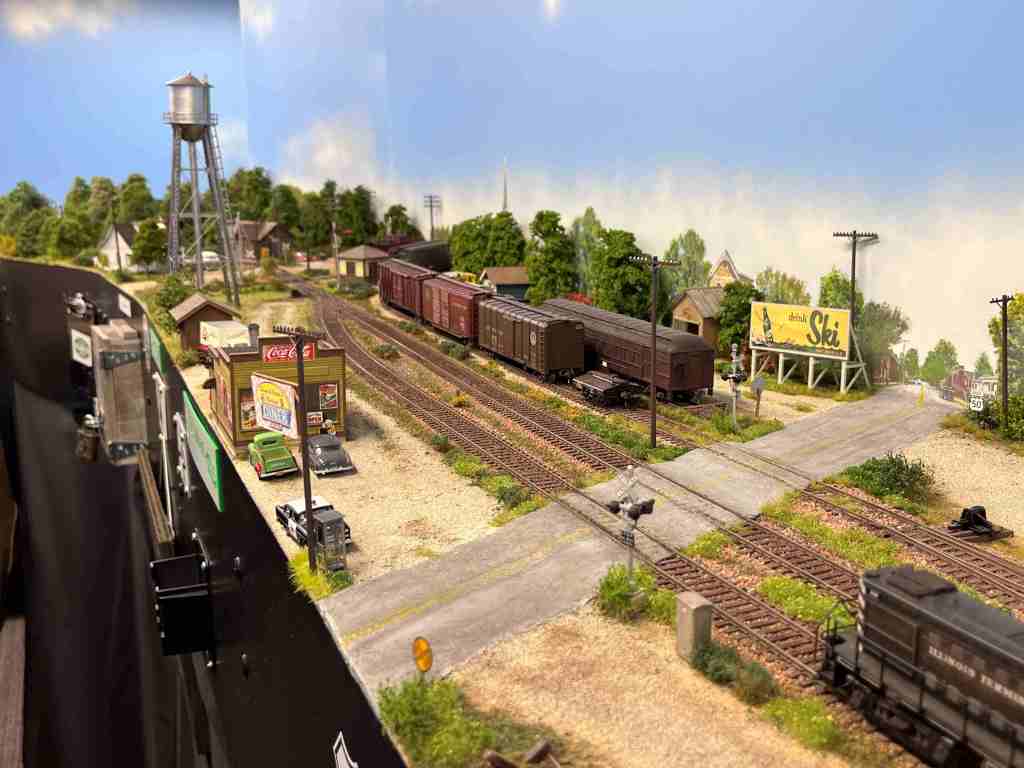
Back to Steve’s neat layout, below. Here’s a long view near the end of the ITS line at O’Fallon. Steve treated us to a Ski (see the billboard) which was a real soda made in St. Louis.
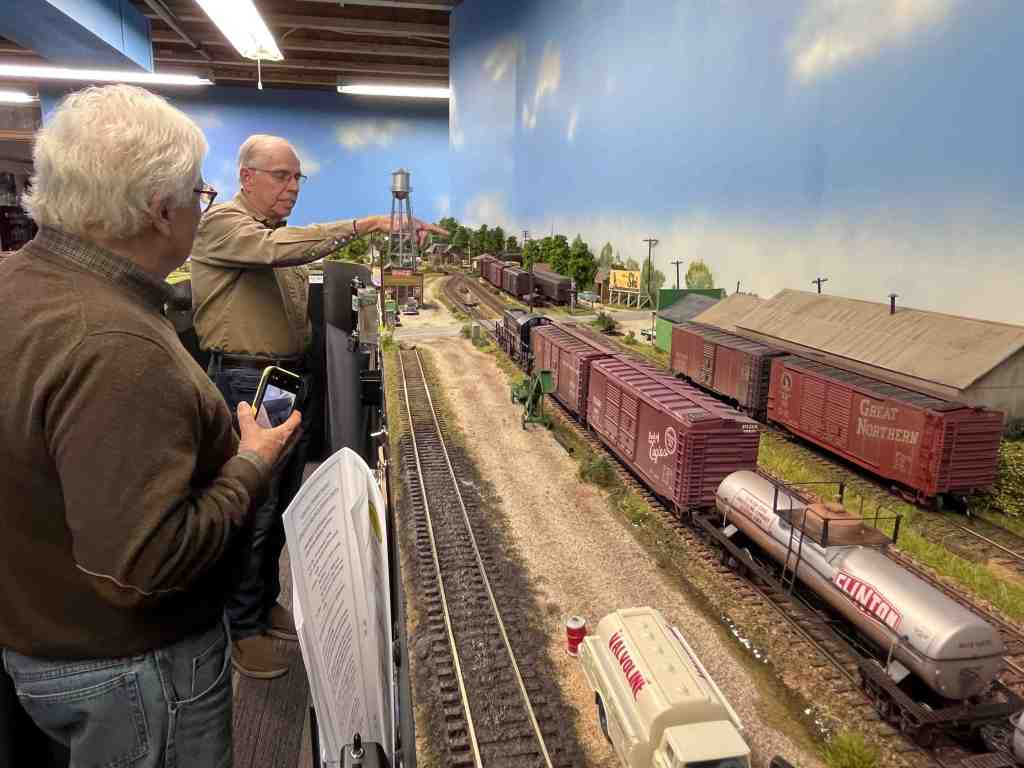
Here’s Steve in the background helping Lonnie and I along as we ran our train. Steve is a pleasant fellow and very helpful and kind. He loves his layout and enjoyed telling us all about it.
Here’s a view of the whole layout on the other side of the peninsula. O’Fallon is on the left and the St. Ellen Mine, in nearby Fairview Heights, is at right. You can see the entrance to the East St. Louis staging, below the mine, at the bottom right.
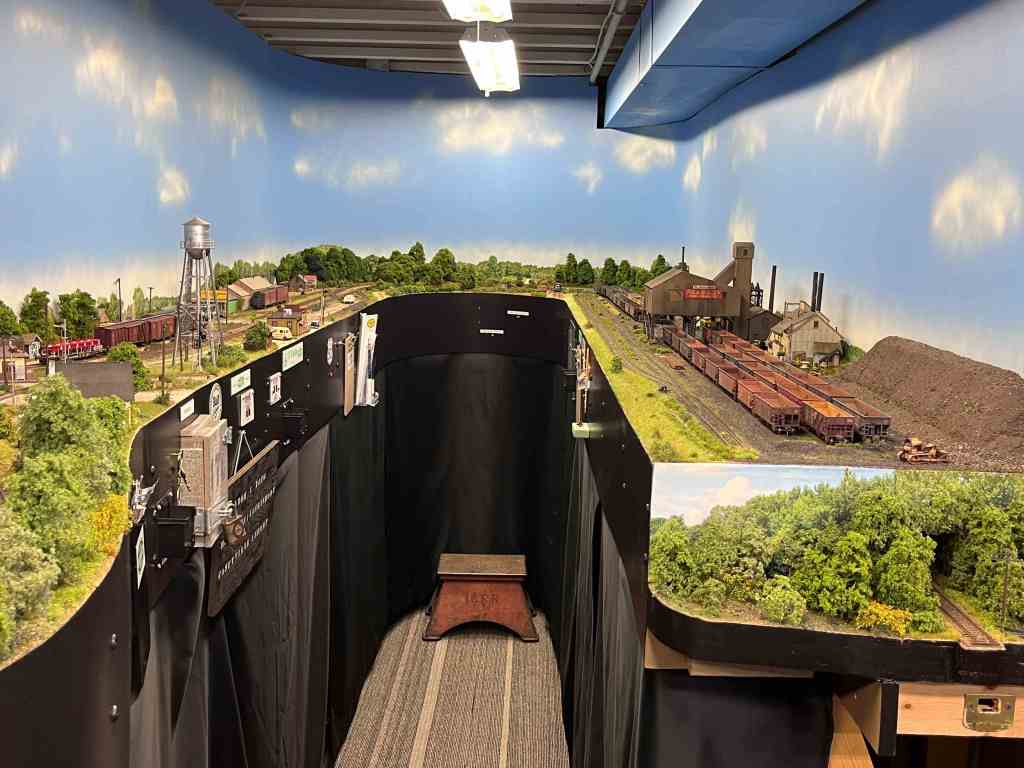
Below. Lonnie and I loved the busy St. Ellen mine scene at the end of the layout.
There is a huge coal seam that runs along the east side of Mississippi River for hundreds of miles. All the railroads had coal mines in this area, but today most of them have played out. The real St. Ellen mine, which tapped this huge seam, was served by the St Louis & O’Fallon railroad–a short, isolated but busy line built to expedite coal from this and a few other mines over to the Terminal RR. More reading on the SLOF is available from the Terminal Railroad Association Historical Society at http://trra-hts.railfan.net/.
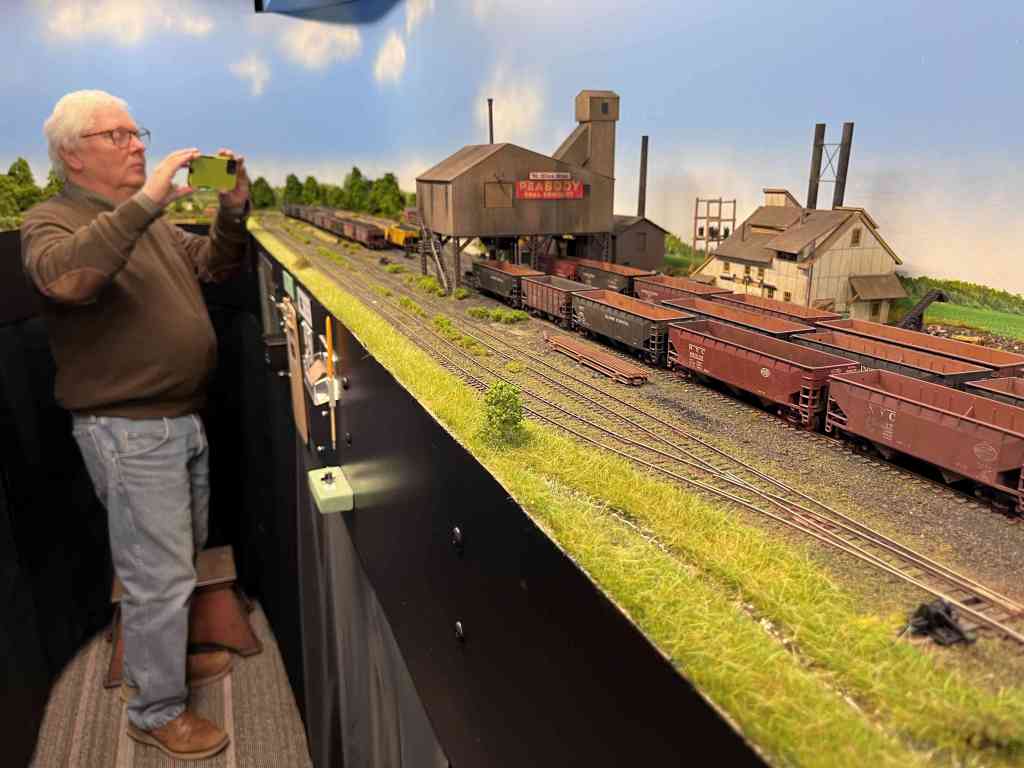
Below. Another view of Steve’s St. Ellen mine. The real mine wasn’t run by Peabody but since Steve spent most of his career working for the Peabody Company, he had to add it.
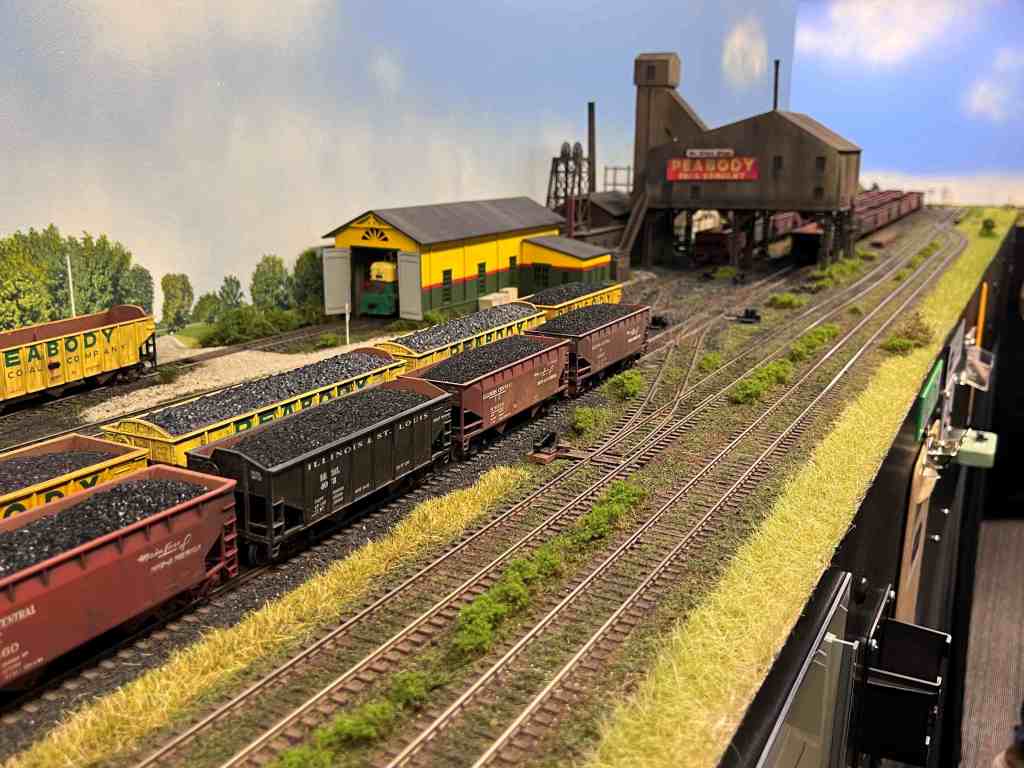
Below. This is the main staging yard on the layout, which is accessed via the wye and the layout entrance. There’s another staging track underneath the coal mine.
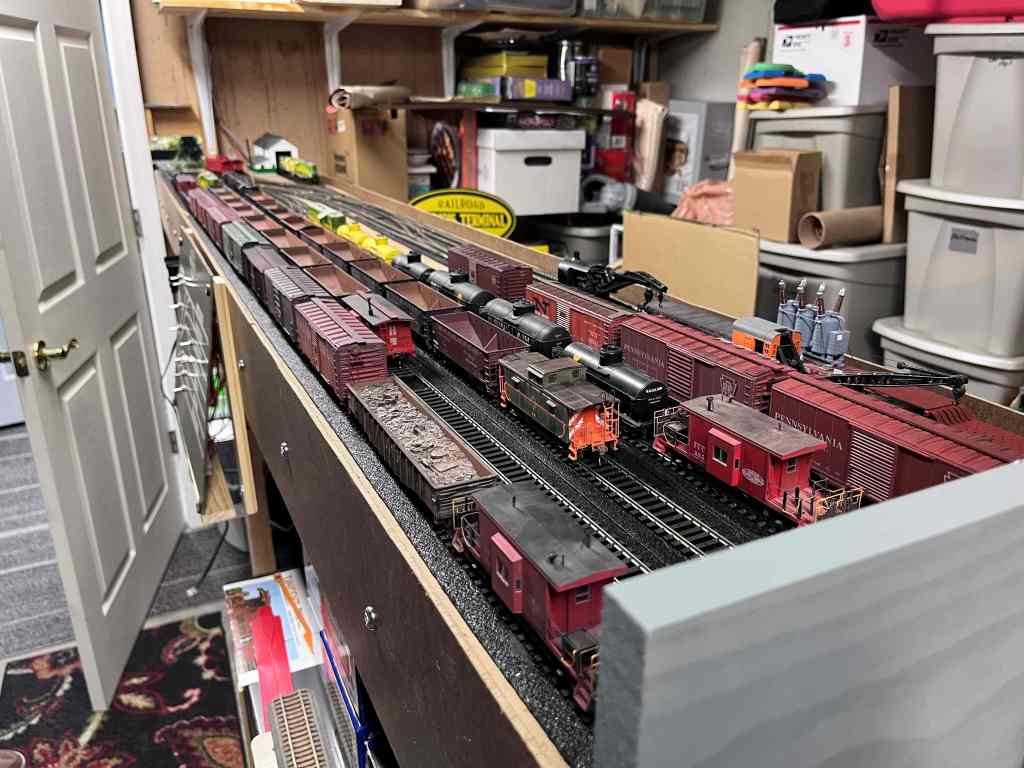
After our run, I photographed Steve (left) and Lonnie talking about Steve’s moveable layout sections. Lonnie’s new layout will need them and Steve’s got a solid system in place. Steve spent many years as a coal miner and an electrical engineer and everything on the layout is meticulously built and works perfectly and reliably.
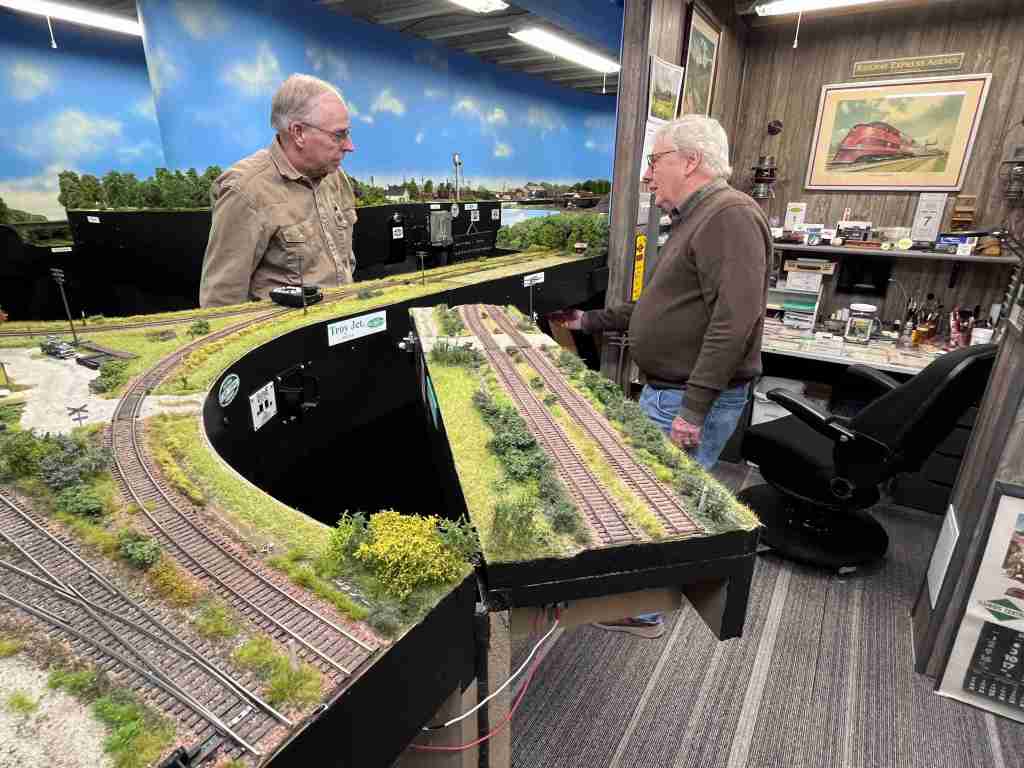
Thanks Steve and Lonnie for a fun night!
Below. Back when I first moved to O’Fallon in the early 2000s, I railfanned what was left of the line ten years before it was converted into a paved, modern bike path. I took this photo on Lebanon Road, a couple miles north of O’Fallon and just south of the PRR crossing. The old ITS crossbucks were still in place then; some of them are still in place today.

I hope you enjoyed the write-up. – John

 Railroad Prototype Modeler
John, thank you. Excellent coverage of a wonderful prototype layout!Jim Dufour
LikeLike
Great article John. And what a fun night it was. Steve could not have been a better host, and what a beautiful layout! I would ( and hope to !) do it all over again. Many many thanks to Steve for his hospitality and to you John for your excellent and thoughtful write up. Now John, come on home so we can do it all over again!,
LikeLike