
What does this post have to do with prototype railroad modeling? Nothing…but I thought you might like seeing something a little different.
A few typically cold, overcast and rainy Saturdays ago I visited the railroad museum in Neustadt, Germany, which is about 45 minutes away from my home.
I have never been a fan of European railroading but now that I am living in Germany I have taken a little more interest. Most German railroading today looks like the photo below. This is the passenger station at Neustadt very near the museum. Most railroading in Germany is about moving passengers–it is fast, safe, efficient, and well-maintained. Freight traffic is limited to specific routes.

Just out of the picture to the left, along the wall, is a nice little museum contained in a few older buildings. This is the Eisenbahnmuseum Neustadt—the Neustadt Railroad Museum. The museum was founded in 1967 and moved to it’s present location in 1972. My online buddy John Hodson told me about last year.
The view below is what greets you upon entering the museum grounds. The main building at center is a retired steam engine shed.
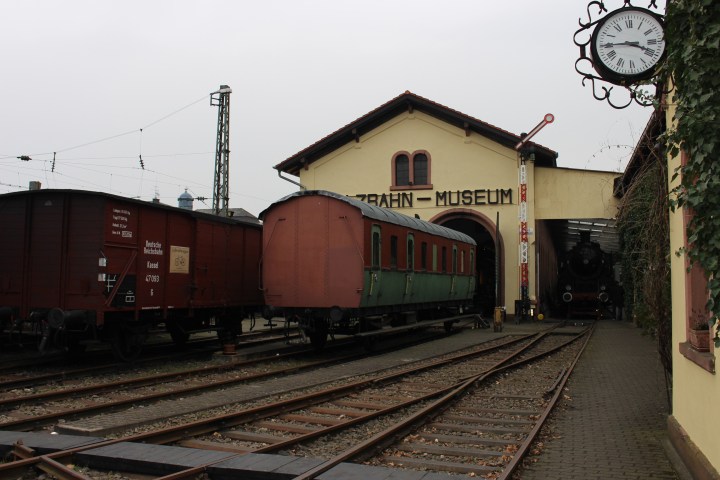
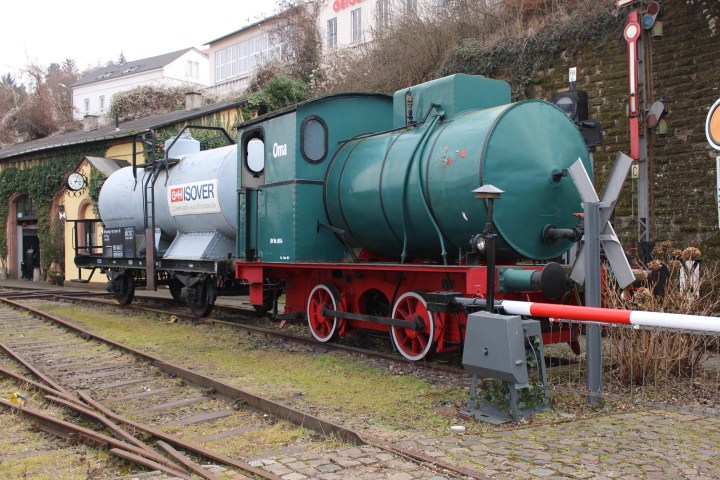
The museum grounds are cramped, and most of the collection is outdoors. Even the collection housed indoors is under a shed and is for the most part exposed to the elements. It’s not very fun too look around on a cold day. It is cramped and photography is difficult. Nevertheless it was definitely worth my time to see the collection, which included locomotives, rolling stock, signals, and a variety of equipment. The fireless tank engine and freight car are right up front as you walk in.
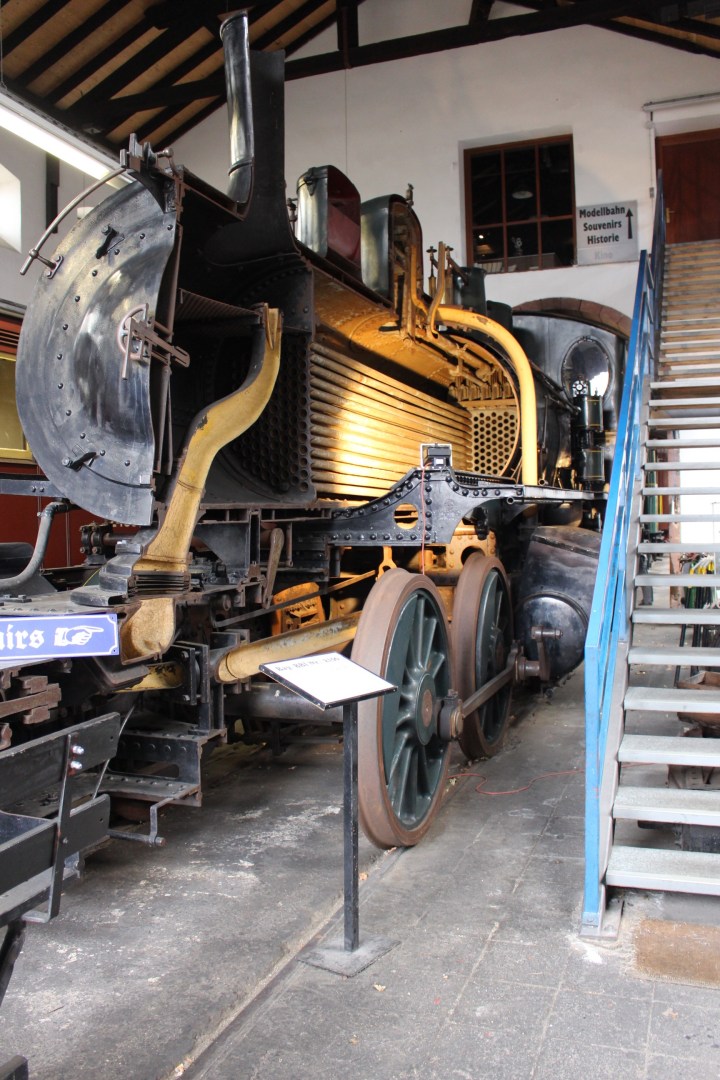
Below is a very interesting display. A steam engine has been literally chopped in half so you can see how steam was created and routed through the “engine”.
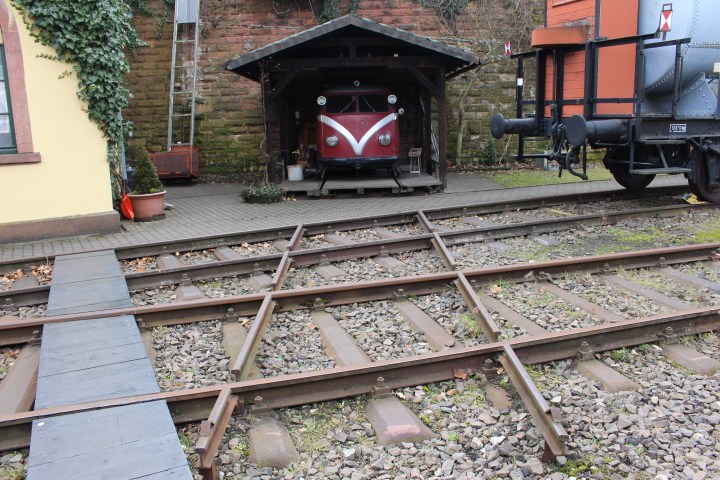
Below. I have never been a fan of VW busses, having driven one occasionally in high school. However, I would drive this one if given the opportunity. This was an inspection car for the Pfaltz Railway. There is no steering wheel–just a speed control where the steering wheel should be. I don’t recall seeing if it was stick-shift, but that would be interesting.

Another view, below, of the VW Inspection Van and the tracks leading to the museum trackage.
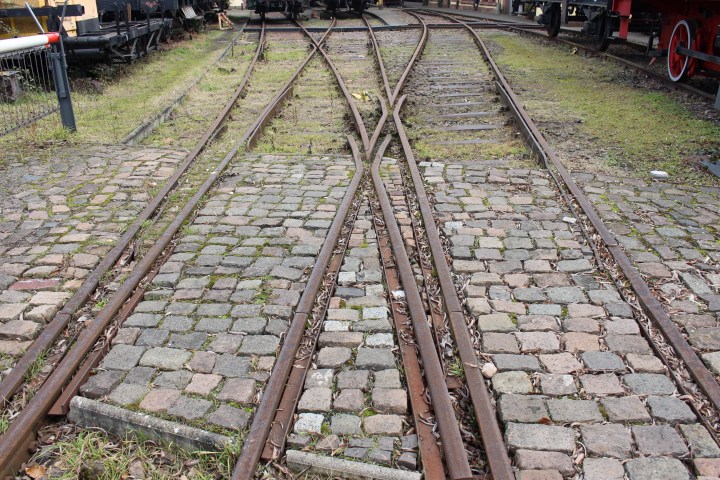
Speaking of the museum trackage, at the entrance end is a cool three-way switch. You don’t see too many of these around the US, but they’re all over Europe. The only one I ever saw on an active line was on the Aberdeen and Rockfish in Aberdeen, North Carolina–and that one is a stub-end!
There are a few freight cars in the collection, including these wagons pictured below.


The museum also has a nice collection of signal equipment. A few of these semaphore-type signals are still active on a few lines around Germany.
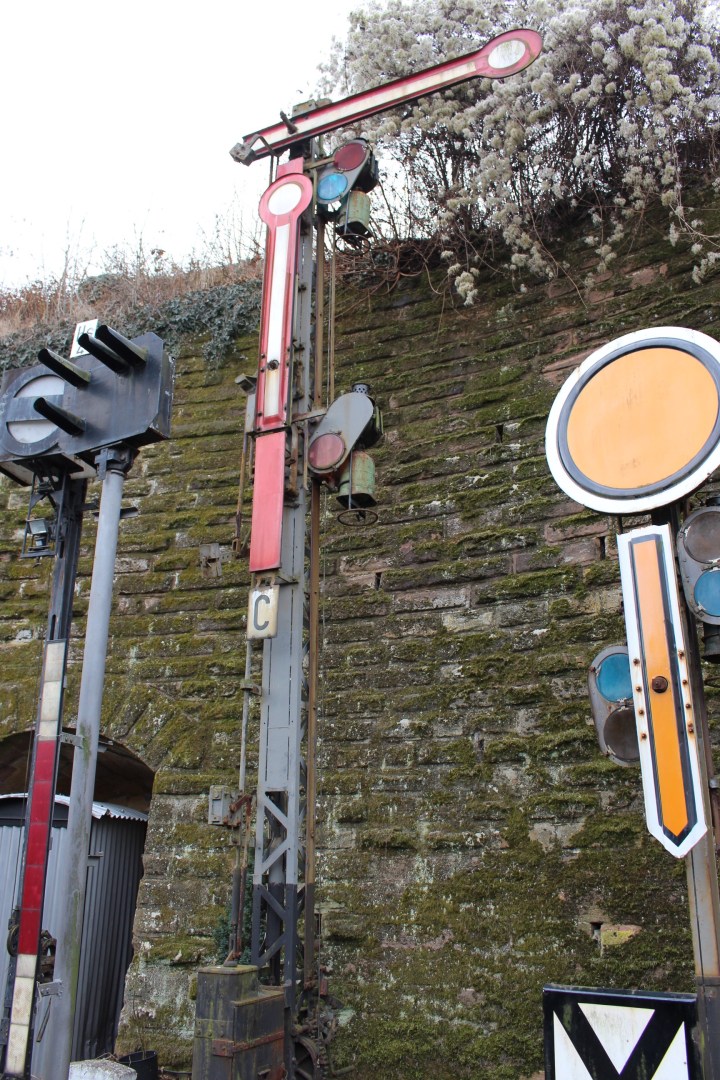
placeholder
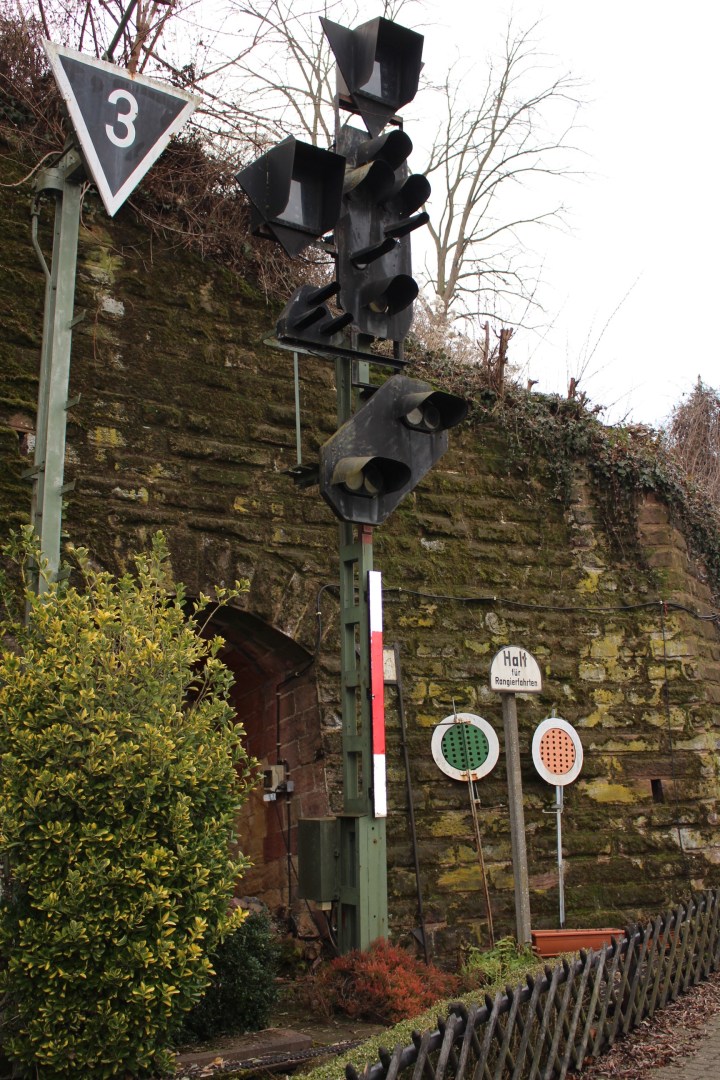
In addition to these 1:1 signals, the museums very-very-narrow gauge line can be seen at the bottom of this photo.


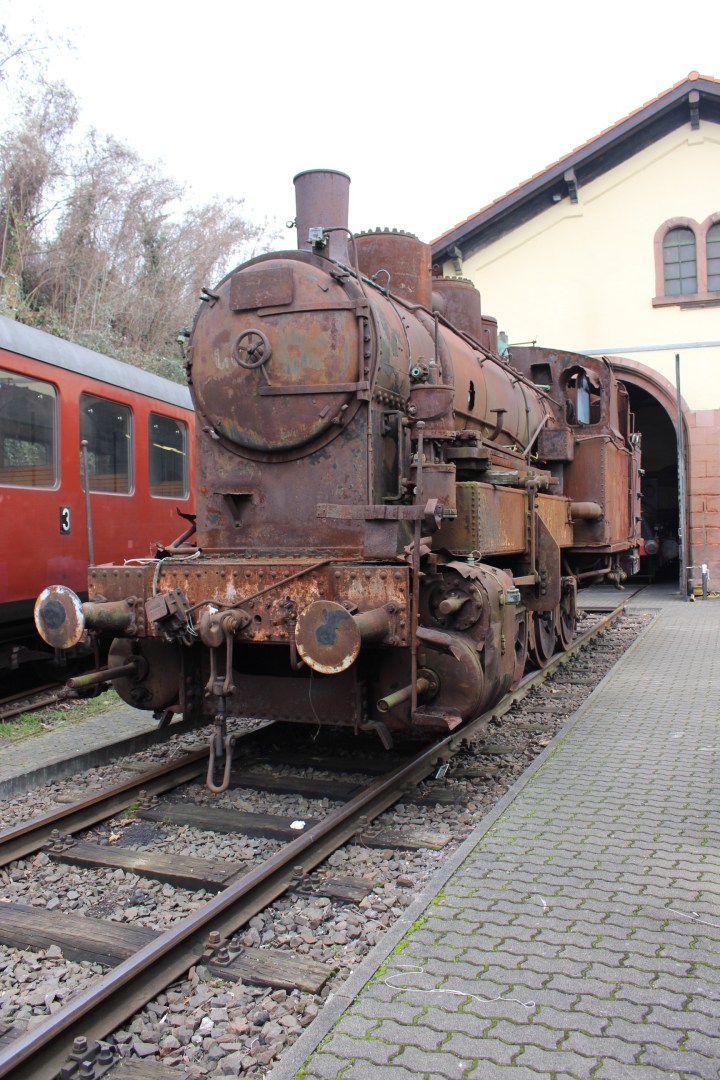
Under the shed in the museum are a number of pieces of rolling stock in good condition, including steam engines and passenger cars used in excursion service. Photography is virtually impossible. Outside, behind the museum, are a number of pieces of rolling stock including this rusting engine.
This is a self-propelled snow plow engine in very good condition. Other engines are also kept in good condition.


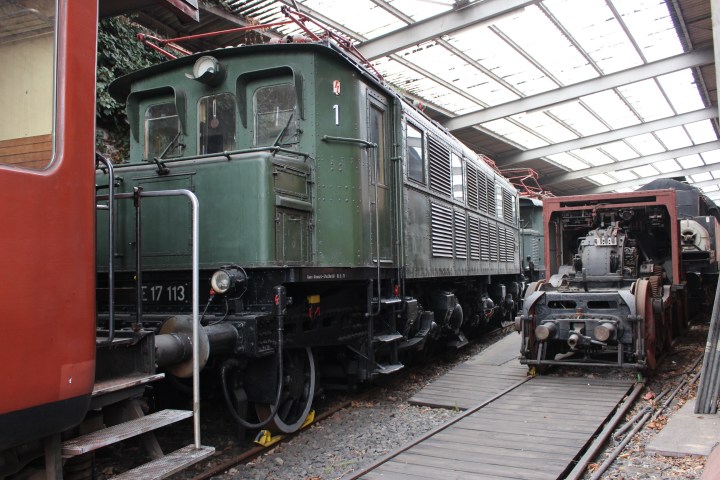
And finally…here’s the pride and joy of the museum. The 18 505 was built in 1908 by Krauss-Maffai in Munich. It is a 2’C1′ locomotive type, weighing in at 163 tons. Top speed was 120 km/h. It is in good condition and smells great–like a steam engine should. I believe it is still in running condition.

If you’re interested in more information, the museum’s website is http://www.eisenbahnmuseum-neustadt.de/index.html
 Railroad Prototype Modeler